
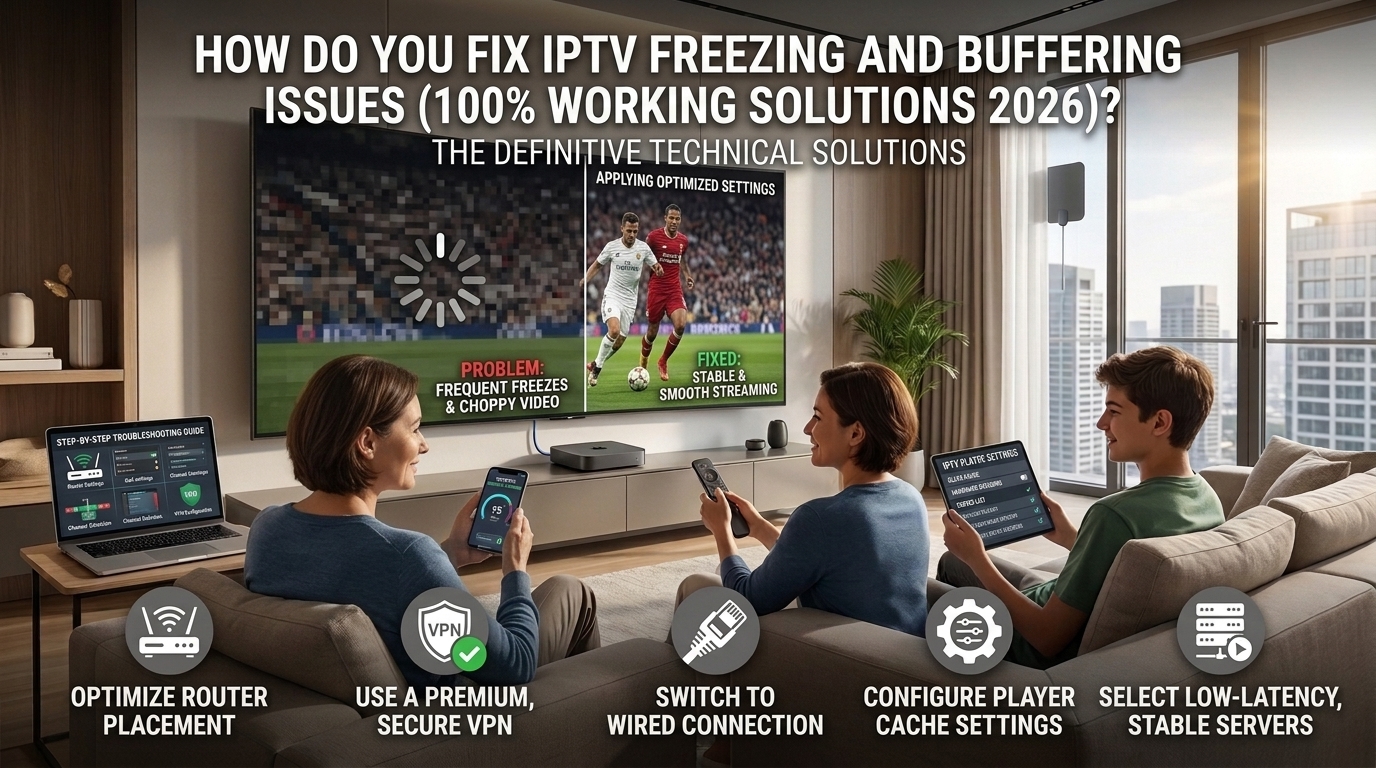
How Do You Fix IPTV Freezing and Buffering Issues (100% Working Solutions 2026)? Nothing ruins movie night or an important football match faster than constant IPTV buffering. One minute you’re watching your favorite show, and the next you’re staring at a spinning loading circle. It doesn’t matter whether you’re using IPTV on a Firestick, Android TV, Smart TV, Windows PC, or an Android box—buffering can affect any device. The good news is that buffering is almost always fixable. In 2026, internet speeds are faster than ever, streaming devices are more powerful, and IPTV technology has improved significantly. Yet many users still experience freezing because of network issues, overloaded servers, poor Wi-Fi coverage, outdated apps, or internet service provider (ISP) throttling. This guide explains the real causes behind IPTV buffering and provides proven solutions that actually work. By following these steps, you’ll dramatically improve your streaming experience and enjoy smooth HD, Full HD, 4K, and even 8K IPTV playback. What Causes IPTV Buffering and Freezing? Many people immediately blame their IPTV provider whenever buffering starts. While overloaded servers can certainly contribute, they’re only one part of the equation. IPTV buffering streaming relies on several components working together, including your internet connection, home network, streaming device, IPTV buffering application, DNS configuration, and the provider’s infrastructure. If even one of these components performs poorly, buffering becomes almost inevitable. A weak Wi-Fi signal is one of the most common reasons users experience freezing. Streaming high-definition video requires a stable and consistent connection, not just high download speeds. Network congestion, especially during evening hours when multiple devices are connected, can also create interruptions. Another overlooked issue is ISP traffic management. Some internet providers identify IPTV traffic and intentionally slow it down during peak usage periods. Device-related problems such as insufficient storage, outdated firmware, or apps consuming resources in the background can also reduce streaming performance. Check Your Internet Speed Before changing any best app for iptv on firestick settings, test your internet speed. A connection that works perfectly for web browsing may not be sufficient for uninterrupted best app for iptv on firestick streaming. Streaming quality depends not only on download speed but also on latency, packet loss, and connection stability. Streaming Quality Recommended Speed SD 10 Mbps HD 20 Mbps Full HD 35 Mbps 4K UHD 50 Mbps+ Multiple Devices 100 Mbps+ If several people in your home are streaming videos, gaming online, or downloading large files simultaneously, you’ll need additional bandwidth. Consistent performance matters more than occasional speed spikes. Running multiple speed tests throughout the day can reveal whether your ISP slows your connection during peak hours. Wired vs Wi-Fi Connection Whenever possible, connect your streaming device using an Ethernet cable. Wired connections offer lower latency, fewer interruptions, and greater reliability than Wi-Fi. If Ethernet isn’t an option, position your router closer to your streaming device or consider upgrading to a Wi-Fi 6 or Wi-Fi 7 router for stronger wireless performance. Optimize Your Home Network Your router plays a much bigger role in performance best app for iptv on firestick than many people realize. An outdated router may struggle to manage multiple connected devices, causing bandwidth congestion and unstable streaming. Restarting the router once every few weeks clears temporary memory issues and often improves overall network performance. Updating your router’s firmware is equally important, as manufacturers regularly release updates that improve security, stability, and performance. Switching to Google’s Public DNS (8.8.8.8 / 8.8.4.4) or Cloudflare’s DNS (1.1.1.1 / 1.0.0.1) can reduce DNS lookup delays and sometimes improve channel loading speeds. Another useful strategy is enabling Quality of Service (QoS) if your router supports it. QoS allows you to prioritize IPTV traffic over less important activities such as downloads or cloud backups, ensuring your streams receive consistent bandwidth. Use a VPN to Prevent ISP Throttling One of the most effective solutions in 2026 is using a reputable VPN. Some ISPs monitor traffic patterns and reduce streaming speeds during periods of heavy usage. A VPN encrypts your internet traffic, preventing your ISP from identifying IPTV buffering usage and helping maintain consistent speeds. Choose a VPN with high-speed servers, modern protocols like WireGuard, and locations close to your physical region. Free VPN services often introduce additional latency and data limitations, making them unsuitable for IPTV streaming. A premium VPN can improve stability while also enhancing online privacy. Keep Your IPTV Application Updated Many users overlook software updates, but outdated IPTV apps can contain bugs that cause freezing, slow channel loading, or compatibility issues with newer devices. Developers continuously optimize performance and release fixes for known problems. Clearing the application’s cache can also resolve playback issues. Cached data may become corrupted over time, causing channels to buffer or fail to load correctly. If problems persist, reinstalling the application provides a clean installation and often restores normal functionality. Improve Streaming Device Performance Even the fastest internet connection cannot compensate for an overloaded streaming device. Fire TV Sticks, Android boxes, Smart TVs, and other streaming hardware require sufficient free storage and available memory to decode video streams smoothly. Delete unused applications, remove unnecessary files, and close background processes whenever possible. Restarting the device periodically clears temporary memory and refreshes system resources. If your streaming device is several years old, upgrading to newer hardware with faster processors and additional RAM can significantly improve IPTV performance, especially for 4K content. Choose a High-Quality IPTV Provider Not all IPTV services are created equal. A reliable provider invests in powerful infrastructure, load-balanced servers, and Content Delivery Networks (CDNs) to distribute traffic efficiently during peak viewing hours. Cheap services often oversell subscriptions, leading to server congestion whenever major sporting events or popular TV shows are streamed. When evaluating an IPTV provider, consider the following factors: Feature Why It Matters Stable servers Reduces buffering Anti-freeze technology Maintains playback during traffic spikes High uptime Ensures channels remain available Fast customer support Resolves technical issues quickly Regular updates Improves compatibility and performance Premium IPTV providers may cost slightly more, but the improved reliability often outweighs the small difference in subscription price. Additional Tips
Understanding IPTV: The Ultimate Beginner’s Guide
In today’s digital-first world, traditional cable TV is quickly becoming a thing of the past. With the rise of more flexible and affordable ways to consume content, IPTV (Internet Protocol Television) has emerged as a popular solution. If you’re wondering, “What is IPTV, and how does it work?” or “Is it the right choice for me?” You’re in the right place. This comprehensive guide will walk you through everything you need to know about IPTV—from understanding what it is, how it works, and its advantages, to helping you decide if it’s the right fit for your entertainment needs. What is IPTV? IPTV, short for Internet Protocol Television, is a modern way to stream TV content via the internet rather than traditional methods like satellite or cable. Simply put, IPTV delivers your favorite shows, movies, and live TV channels through an internet connection. This means you can watch content on various devices, including TVs, smartphones, tablets, or even your laptop, anywhere with an internet connection. Unlike cable TV, which broadcasts content in real-time, IPTV allows for more flexibility, offering you options like Video On Demand (VOD), live streaming, and time-shifted media (watching shows after they air). With IPTV, the control is in your hands—stream what you want, when you want. How Does IPTV Work? To understand IPTV better, let’s break it down into simple terms. IPTV works by transmitting video content through internet protocols, which means data is delivered in packets over a network. Here’s a step-by-step explanation: Think of IPTV as streaming services like Netflix or Hulu, but with far more variety, including live TV channels, sports events, and international programming. Types of IPTV Services IPTV offers several formats to cater to different viewing needs. Here are the main types: 1. Live Television This is similar to traditional cable or satellite TV, where you can watch live broadcasts of your favorite channels in real-time. It’s perfect for sports enthusiasts or news junkies who want to stay updated. 2. Video On Demand (VOD) With VOD, you get access to a library of movies, TV series, and other content that you can stream at your convenience. Think of it as a personalized entertainment catalog. 3. Time-Shifted Media Missed an episode of your favorite show? Time-shifted media lets you catch up on recently aired content. It’s like a DVR, but everything is stored online. 4. Catch-Up TV Catch-up TV is similar to time-shifted media but focuses specifically on TV shows you may have missed within a specific time frame (e.g., the last 7 days). 5. Pay-Per-View (PPV) For special events like boxing matches or concerts, IPTV offers PPV options, where you can pay for and stream high-demand content. Advantages of IPTV Over Cable TV When comparing IPTV and cable TV, IPTV offers several benefits that make it a superior choice for modern viewers: IPTV Setup for Beginners Getting started with IPTV is easier than you might think. Here’s a quick guide to set up IPTV at home: IPTV vs Cable TV: Which Is Better for You? If you’re debating between IPTV and cable TV, here’s a quick comparison to help you decide: What to Look for in an IPTV Provider Choosing the right IPTV provider is crucial for a seamless streaming experience. Here are some factors to consider: A trusted provider like StreamTVUniverse checks all these boxes, offering a superior IPTV experience. IPTV Advantages and Disadvantages Before diving into IPTV, it’s important to weigh its pros and cons. Pros: Cons: Best IPTV Services for 2025 When it comes to choosing the best IPTV services, here are some top contenders for 2025: Each service has its unique offerings, so take the time to explore what works best for you. FAQs About IPTV 1. What is IPTV, and how does it work? IPTV stands for Internet Protocol Television and delivers TV content via the internet. It works by transmitting video data in packets, which you can stream in real-time or on-demand. 2. How is IPTV different from cable TV? Unlike cable TV, IPTV offers greater flexibility, access to on-demand content, and the ability to watch on various devices. 3. Is IPTV legal? Most IPTV providers operate legally, but some may stream copyrighted content without proper licensing. Always choose a reputable provider like StreamTVUniverse to ensure compliance. 4. What equipment do I need for IPTV? All you need is a stable internet connection, a compatible device (Smart TV, smartphone, etc.), and an IPTV app or player. Start Streaming with StreamTVUniverse Ready to unlock the future of entertainment? With StreamTVUniverse, you gain access to one of the best IPTV services available. From live TV to on-demand content, we’ve got everything you need to transform your viewing experience. Don’t wait—buy your IPTV subscription today and join thousands of satisfied customers enjoying endless entertainment. Choose StreamTVUniverse for the ultimate IPTV experience!
Top Free IPTV Apps for 2025
In today’s digital-first world, traditional cable TV is quickly becoming a thing of the past. With the rise of more flexible and affordable ways to consume content, IPTV (Internet Protocol Television) has emerged as a popular solution. If you’re wondering, “What is IPTV, and how does it work?” or “Is it the right choice for me?” You’re in the right place. This comprehensive guide will walk you through everything you need to know about IPTV—from understanding what it is, how it works, and its advantages, to helping you decide if it’s the right fit for your entertainment needs. What is IPTV? IPTV, short for Internet Protocol Television, is a modern way to stream TV content via the internet rather than traditional methods like satellite or cable. Simply put, IPTV delivers your favorite shows, movies, and live TV channels through an internet connection. This means you can watch content on various devices, including TVs, smartphones, tablets, or even your laptop, anywhere with an internet connection. Unlike cable TV, which broadcasts content in real-time, IPTV allows for more flexibility, offering you options like Video On Demand (VOD), live streaming, and time-shifted media (watching shows after they air). With IPTV, the control is in your hands—stream what you want, when you want. How Does IPTV Work? To understand IPTV better, let’s break it down into simple terms. IPTV works by transmitting video content through internet protocols, which means data is delivered in packets over a network. Here’s a step-by-step explanation: Think of IPTV as streaming services like Netflix or Hulu, but with far more variety, including live TV channels, sports events, and international programming. Types of IPTV Services IPTV offers several formats to cater to different viewing needs. Here are the main types: 1. Live Television This is similar to traditional cable or satellite TV, where you can watch live broadcasts of your favorite channels in real-time. It’s perfect for sports enthusiasts or news junkies who want to stay updated. 2. Video On Demand (VOD) With VOD, you get access to a library of movies, TV series, and other content that you can stream at your convenience. Think of it as a personalized entertainment catalog. 3. Time-Shifted Media Missed an episode of your favorite show? Time-shifted media lets you catch up on recently aired content. It’s like a DVR, but everything is stored online. 4. Catch-Up TV Catch-up TV is similar to time-shifted media but focuses specifically on TV shows you may have missed within a specific time frame (e.g., the last 7 days). 5. Pay-Per-View (PPV) For special events like boxing matches or concerts, IPTV offers PPV options, where you can pay for and stream high-demand content. Advantages of IPTV Over Cable TV When comparing IPTV and cable TV, IPTV offers several benefits that make it a superior choice for modern viewers: IPTV Setup for Beginners Getting started with IPTV is easier than you might think. Here’s a quick guide to set up IPTV at home: IPTV vs Cable TV: Which Is Better for You? If you’re debating between IPTV and cable TV, here’s a quick comparison to help you decide: What to Look for in an IPTV Provider Choosing the right IPTV provider is crucial for a seamless streaming experience. Here are some factors to consider: A trusted provider like StreamTVUniverse checks all these boxes, offering a superior IPTV experience. IPTV Advantages and Disadvantages Before diving into IPTV, it’s important to weigh its pros and cons. Pros: Cons: Best IPTV Services for 2025 When it comes to choosing the best IPTV services, here are some top contenders for 2025: Each service has its unique offerings, so take the time to explore what works best for you. FAQs About IPTV 1. What is IPTV, and how does it work? IPTV stands for Internet Protocol Television and delivers TV content via the internet. It works by transmitting video data in packets, which you can stream in real-time or on-demand. 2. How is IPTV different from cable TV? Unlike cable TV, IPTV offers greater flexibility, access to on-demand content, and the ability to watch on various devices. 3. Is IPTV legal? Most IPTV providers operate legally, but some may stream copyrighted content without proper licensing. Always choose a reputable provider like StreamTVUniverse to ensure compliance. 4. What equipment do I need for IPTV? All you need is a stable internet connection, a compatible device (Smart TV, smartphone, etc.), and an IPTV app or player. Start Streaming with StreamTVUniverse Ready to unlock the future of entertainment? With StreamTVUniverse, you gain access to one of the best IPTV services available. From live TV to on-demand content, we’ve got everything you need to transform your viewing experience. Don’t wait—buy your IPTV subscription today and join thousands of satisfied customers enjoying endless entertainment. Choose StreamTVUniverse for the ultimate IPTV experience!
Get the Best IPTV Subscription Plans
In today’s digital age, the way we consume television has evolved dramatically, leading to a surge in popularity for IPTV (Internet Protocol Television). With countless IPTV subscription plans available, viewers have endless options for accessing their favorite shows, movies, and live channels from the comfort of their own homes. However, choosing the best IPTV subscription can be a daunting task, given the plethora of choices and varying service quality. In this article, we’ll guide you through the key factors to consider when selecting an IPTV subscription that meets your needs, ensuring you make an informed decision that enhances your entertainment experience. Whether you’re a sports enthusiast, a movie buff, or simply looking for a reliable streaming option, understanding the essentials of IPTV subscriptions will help you maximize your viewing pleasure. Understanding IPTV Subscription Options In recent years, Internet Protocol Television (IPTV) has revolutionized how we consume media. This technology delivers television content over the internet, allowing users to access a wide array of channels and on-demand content without the constraints of traditional cable subscriptions. As more viewers opt for IPTV solutions, understanding the various subscription options available becomes essential. An IPTV subscription can range from basic packages featuring local channels to extensive bundles that include international networks, premium sports, and on-demand movies. When considering an IPTV subscription, it is crucial to evaluate the available channel offerings. Some providers cater to specific interests, such as sports or international news, while others offer comprehensive packages that cover multiple genres. Additionally, the quality of the streaming service is paramount; high-definition options are commonly available but may require a faster internet connection. Readers should also consider whether the subscription offers cloud DVR functionality, which allows for the recording of live shows and movies for later viewing, adding to the flexibility of the service. Another factor to consider is compatibility with various devices. Many IPTV services can be accessed through smart TVs, streaming devices, mobile phones, and tablets, creating a versatile viewing experience. Before committing to a subscription, it is wise to check if your existing devices are supported and whether any specific hardware or applications need to be purchased or downloaded. Some providers may also impose geographic restrictions on certain content, which can affect accessibility based on your location, making it important to choose a service that meets your viewing needs. In addition to channel offerings and device compatibility, pricing structures can vary significantly among IPTV subscriptions. Some services operate on a pay-per-view basis, while others charge monthly or yearly fees. Promotions and trial periods are often available, allowing potential subscribers to test a service before fully committing. Ultimately, as the landscape of television watching continues to evolve, understanding the intricacies of IPTV subscription options will empower users to make informed decisions that best suit their viewing preferences and lifestyle. Choosing the Right IPTV Package for You When it comes to selecting the right IPTV package for your viewing needs, there are several factors to consider that can elevate your entertainment experience. An IPTV subscription can provide a wide array of channels and on-demand content, making it essential to identify what you truly want from your service. Before committing to any package, think about the channels that matter most to you—be it sports, movies, news, or international programming. Understanding your preferences will help you narrow down which IPTV subscriptions align with your interests. Another crucial aspect to consider is the quality of the service provided. Look for packages that offer high-definition streaming and a reliable connection. The last thing you want is to invest in an IPTV subscription only to experience buffering issues or unreliable service during your favorite shows. Research reviews and testimonials to gauge the performance of different providers, factors such as customer support, and the overall user experience. Customization options can also play a significant role in your decision-making process. Some providers allow you to tailor your IPTV subscriptions by adding or removing specific channels or features. If you’re someone who enjoys a mix of general entertainment and niche content, having this flexibility can enhance your experience. Additionally, consider whether the IPTV package offers multi-device compatibility, enabling you to enjoy your favorite content on various screens—be it your television, tablet, or smartphone. Lastly, pricing is always a consideration when selecting an IPTV package. While it may be tempting to opt for the cheapest option available, balance your budget with the quality and features you desire. Some packages might offer promotional rates initially but could become more expensive over time. Evaluate the long-term value of each IPTV subscription before making a final choice. Taking the time to analyze your options will ensure you find a package that not only fits your requirements but also elevates your entertainment experience to the next level. Benefits of Subscribing to an IPTV Service In today’s digital age, the way we consume television content has evolved significantly. One of the most popular alternatives to traditional cable services is Internet Protocol Television (IPTV). When you opt for an IPTV subscription, you’re tapping into a diverse world of entertainment that not only meets various viewing preferences but also enhances your overall viewing experience. With the flexibility of accessing live TV, on-demand shows, and a vast library of movies, IPTV services cater to the needs of a wide range of audiences. A key benefit of an IPTV subscription is the convenience it offers. Unlike conventional cable packages, IPTV allows you to watch your favorite shows and movies on multiple devices, including smartphones, tablets, and smart TVs. This means that you are no longer confined to a single screen in your living room, allowing you to watch content from anywhere, whether you’re at home or on the go. Moreover, many IPTV services provide user-friendly interfaces and features such as catch-up TV, enabling you to watch previously aired content at your convenience. Cost-effectiveness is another major advantage of subscribing to an IPTV service. Traditional cable providers often come with hefty monthly fees and long-term contracts, whereas IPTV subscriptions usually offer a
