
Table of Contents
ToggleHow Do You Fix IPTV Freezing and Buffering Issues (100% Working Solutions 2026)?
Nothing ruins movie night or an important football match faster than constant IPTV buffering. One minute you’re watching your favorite show, and the next you’re staring at a spinning loading circle. It doesn’t matter whether you’re using IPTV on a Firestick, Android TV, Smart TV, Windows PC, or an Android box—buffering can affect any device.
The good news is that buffering is almost always fixable. In 2026, internet speeds are faster than ever, streaming devices are more powerful, and IPTV technology has improved significantly. Yet many users still experience freezing because of network issues, overloaded servers, poor Wi-Fi coverage, outdated apps, or internet service provider (ISP) throttling.
This guide explains the real causes behind IPTV buffering and provides proven solutions that actually work. By following these steps, you’ll dramatically improve your streaming experience and enjoy smooth HD, Full HD, 4K, and even 8K IPTV playback.
What Causes IPTV Buffering and Freezing?
Many people immediately blame their IPTV provider whenever buffering starts. While overloaded servers can certainly contribute, they’re only one part of the equation. IPTV buffering streaming relies on several components working together, including your internet connection, home network, streaming device, IPTV buffering application, DNS configuration, and the provider’s infrastructure. If even one of these components performs poorly, buffering becomes almost inevitable.
A weak Wi-Fi signal is one of the most common reasons users experience freezing. Streaming high-definition video requires a stable and consistent connection, not just high download speeds. Network congestion, especially during evening hours when multiple devices are connected, can also create interruptions. Another overlooked issue is ISP traffic management. Some internet providers identify IPTV traffic and intentionally slow it down during peak usage periods. Device-related problems such as insufficient storage, outdated firmware, or apps consuming resources in the background can also reduce streaming performance.
Check Your Internet Speed
Before changing any best app for iptv on firestick settings, test your internet speed. A connection that works perfectly for web browsing may not be sufficient for uninterrupted best app for iptv on firestick streaming. Streaming quality depends not only on download speed but also on latency, packet loss, and connection stability.
| Streaming Quality | Recommended Speed |
|---|---|
| SD | 10 Mbps |
| HD | 20 Mbps |
| Full HD | 35 Mbps |
| 4K UHD | 50 Mbps+ |
| Multiple Devices | 100 Mbps+ |
If several people in your home are streaming videos, gaming online, or downloading large files simultaneously, you’ll need additional bandwidth. Consistent performance matters more than occasional speed spikes. Running multiple speed tests throughout the day can reveal whether your ISP slows your connection during peak hours.
Wired vs Wi-Fi Connection
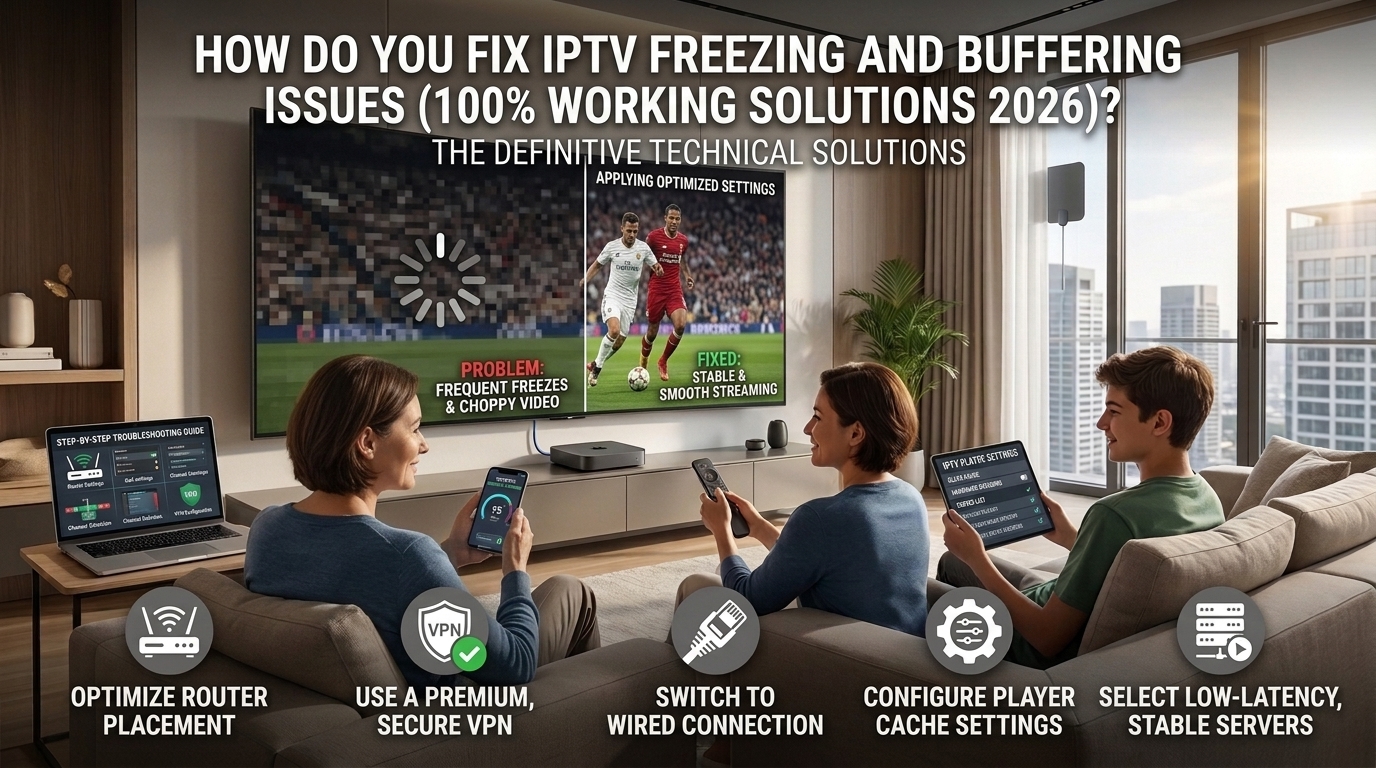
Whenever possible, connect your streaming device using an Ethernet cable. Wired connections offer lower latency, fewer interruptions, and greater reliability than Wi-Fi. If Ethernet isn’t an option, position your router closer to your streaming device or consider upgrading to a Wi-Fi 6 or Wi-Fi 7 router for stronger wireless performance.
Optimize Your Home Network
Your router plays a much bigger role in performance best app for iptv on firestick than many people realize. An outdated router may struggle to manage multiple connected devices, causing bandwidth congestion and unstable streaming. Restarting the router once every few weeks clears temporary memory issues and often improves overall network performance.
Updating your router’s firmware is equally important, as manufacturers regularly release updates that improve security, stability, and performance. Switching to Google’s Public DNS (8.8.8.8 / 8.8.4.4) or Cloudflare’s DNS (1.1.1.1 / 1.0.0.1) can reduce DNS lookup delays and sometimes improve channel loading speeds.
Another useful strategy is enabling Quality of Service (QoS) if your router supports it. QoS allows you to prioritize IPTV traffic over less important activities such as downloads or cloud backups, ensuring your streams receive consistent bandwidth.
Use a VPN to Prevent ISP Throttling
One of the most effective solutions in 2026 is using a reputable VPN. Some ISPs monitor traffic patterns and reduce streaming speeds during periods of heavy usage. A VPN encrypts your internet traffic, preventing your ISP from identifying IPTV buffering usage and helping maintain consistent speeds.
Choose a VPN with high-speed servers, modern protocols like WireGuard, and locations close to your physical region. Free VPN services often introduce additional latency and data limitations, making them unsuitable for IPTV streaming. A premium VPN can improve stability while also enhancing online privacy.
Keep Your IPTV Application Updated
Many users overlook software updates, but outdated IPTV apps can contain bugs that cause freezing, slow channel loading, or compatibility issues with newer devices. Developers continuously optimize performance and release fixes for known problems.
Clearing the application’s cache can also resolve playback issues. Cached data may become corrupted over time, causing channels to buffer or fail to load correctly. If problems persist, reinstalling the application provides a clean installation and often restores normal functionality.
Improve Streaming Device Performance
Even the fastest internet connection cannot compensate for an overloaded streaming device. Fire TV Sticks, Android boxes, Smart TVs, and other streaming hardware require sufficient free storage and available memory to decode video streams smoothly.
Delete unused applications, remove unnecessary files, and close background processes whenever possible. Restarting the device periodically clears temporary memory and refreshes system resources. If your streaming device is several years old, upgrading to newer hardware with faster processors and additional RAM can significantly improve IPTV performance, especially for 4K content.
Choose a High-Quality IPTV Provider
Not all IPTV services are created equal. A reliable provider invests in powerful infrastructure, load-balanced servers, and Content Delivery Networks (CDNs) to distribute traffic efficiently during peak viewing hours. Cheap services often oversell subscriptions, leading to server congestion whenever major sporting events or popular TV shows are streamed.
When evaluating an IPTV provider, consider the following factors:
| Feature | Why It Matters |
|---|---|
| Stable servers | Reduces buffering |
| Anti-freeze technology | Maintains playback during traffic spikes |
| High uptime | Ensures channels remain available |
| Fast customer support | Resolves technical issues quickly |
| Regular updates | Improves compatibility and performance |
Premium IPTV providers may cost slightly more, but the improved reliability often outweighs the small difference in subscription price.
Additional Tips That Actually Work
Several small adjustments can collectively produce noticeable improvements in streaming quality:
- Restart your modem and router every few weeks.
- Disconnect devices that aren’t actively using the internet.
- Use the 5 GHz Wi-Fi band instead of 2.4 GHz when possible.
- Keep your IPTV app updated.
- Avoid running large downloads while streaming.
- Use a VPN if your ISP throttles IPTV traffic.
- Replace old Ethernet cables if they’re damaged.
- Upgrade older routers that cannot handle modern streaming demands.
These simple optimizations frequently eliminate buffering without requiring any expensive hardware upgrades.
Conclusion
IPTV buffering is frustrating, but it rarely has a single cause. Most streaming issues result from a combination of internet speed limitations, Wi-Fi interference, outdated equipment, overloaded IPTV servers, or ISP throttling. The good news is that each of these problems has a practical solution.
Start by testing your internet connection, then optimize your home network, update your IPTV buffering application, clear cached data, and ensure your streaming device has sufficient resources available. If throttling is suspected, using a premium VPN can make a significant difference. Finally, remember that choosing a reliable IPTV provider with stable servers is one of the most important decisions you can make for a smooth viewing experience. Applying these proven solutions will dramatically reduce freezing and buffering while allowing you to enjoy uninterrupted IPTV streaming throughout 2026.
Frequently Asked Questions
1. Why does IPTV buffer even with fast internet?
Buffering can still occur because of Wi-Fi interference, overloaded IPTV servers, ISP throttling, outdated apps, or insufficient device resources.
2. Is a VPN necessary for IPTV?
Not always. However, a VPN can help if your ISP limits IPTV traffic or if you want additional privacy while streaming.
3. Does Ethernet improve IPTV performance?
Yes. Ethernet provides a more stable connection with lower latency compared to Wi-Fi, reducing buffering and freezing.
4. How often should I clear my IPTV app cache?
Clearing the cache every few weeks helps remove temporary files that may interfere with playback.
5. Can an old router cause IPTV buffering?
Absolutely. Older routers may struggle with modern streaming demands, especially when multiple devices are connected simultaneously.