
Table of Contents
ToggleINTRODUCTION
As television technology continues to evolve, viewers have more choices than ever before. For decades, cable TV and satellite TV dominated home entertainment. Today, Internet Protocol Television (IPTV) has emerged as a modern alternative, offering greater flexibility, extensive content libraries, and on-demand viewing.
If you’re wondering whether IP TV is better than traditional cable or satellite TV, this guide will compare all three services in terms of technology, picture quality, channel selection, pricing, reliability, features, and overall value.
What Is Best IPTV services?
IPTV (Internet Protocol Television) is a technology that delivers television content through an internet connection instead of traditional cable lines or satellite signals.
Unlike conventional TV services that broadcast every channel simultaneously, IP TV streams only the content you choose to watch.
Common IP TV features include:
- Live TV channels
- Video on Demand (VOD)
- TV series libraries
- Catch-up TV
- Electronic Program Guide (EPG)
- Multi-device compatibility
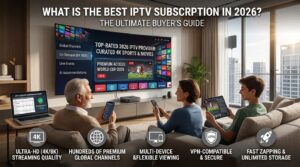
All you need is a stable internet connection and a compatible device such as a Smart TV, Android TV Box, Fire TV Stick, smartphone, tablet, or computer.
IPTV vs Cable TV?
Cable TV delivers television programming through underground or overhead coaxial or fiber-optic cables installed by your service provider.
Subscribers usually receive:
- Local channels
- National channels
- Premium movie channels
- Sports packages
Cable TV has been a reliable solution for decades, although it typically requires professional installation and monthly contracts.
What Is Satellite TV?
Satellite television broadcasts channels from satellites orbiting Earth to a satellite dish installed at your home.
Satellite TV is especially useful in rural areas where cable infrastructure is unavailable.
However, weather conditions such as heavy rain or snow may affect signal quality.
IPTV vs Cable vs Satellite: Quick Comparison
| Feature | IPTV | Cable TV | Satellite TV |
|---|---|---|---|
| Delivery Method | Internet | Coaxial/Fiber Cable | Satellite Signal |
| Installation | Very Easy | Professional Installation | Satellite Dish Required |
| Live TV | Yes | Yes | Yes |
| On-Demand Content | Excellent | Limited | Limited |
| Works Anywhere | Yes (Internet Required) | Usually Home Only | Home Only |
| Multiple Devices | Yes | Limited | Limited |
| Weather Interference | No | No | Yes |
| Contract Required | Often No | Usually Yes | Usually Yes |
| Monthly Cost | Usually Lower | Higher | Higher |
Picture Quality
One of the biggest concerns for television viewers is image quality.
IPTV
Modern IP TV services support:
- HD
- Full HD
- 4K Ultra HD
- HDR (on supported devices)
Picture quality mainly depends on your internet speed and the quality of the IPTV provider.
Cable TV
Cable offers stable HD quality but many providers still compress channels to save bandwidth, which can reduce picture clarity.
Satellite TV
Satellite providers also offer HD and 4K channels, but signal interruptions caused by storms may reduce quality.
Winner: IPTV (with fast internet)
Channel Selection
IPTV generally offers significantly more channels than traditional TV providers.
Many IPTV services include:
- International channels
- Sports networks
- Entertainment
- Kids programming
- News
- Movies
- Music
- Regional channels
Cable providers usually offer regional packages with fewer international options.
Satellite services may provide additional packages but often charge extra for premium content.
Winner: IP TV
On-Demand Entertainment
Traditional TV follows fixed broadcasting schedules.
IPTV completely changes the viewing experience.
Instead of waiting for your favorite show:
- Watch anytime
- Pause live TV
- Resume later
- Access thousands of movies
- Watch complete TV series
This flexibility makes IPTV particularly attractive for busy households.
Device Compatibility
Cable and satellite generally require proprietary receivers.
IP TV works on almost any internet-connected device:
- Smart TVs
- Android TV
- Google TV
- Amazon Fire TV Stick
- Apple TV
- Windows PCs
- Mac
- Android phones
- iPhones
- Tablets
Many services even allow multiple simultaneous streams.
Winner: IP TV
Installation Process
IPTV
Setup typically takes only a few minutes.
Most providers simply send:
- Login credentials
- M3U playlist
- Xtream Codes
- Activation instructions
No technician visit is required.
Cable
Cable installation often requires:
- Technician appointment
- Wiring
- Set-top box
- Activation
Satellite
Satellite installation is usually the most complicated because it requires:
- Mounting a satellite dish
- Proper alignment
- Outdoor wiring
Winner: IP TV
Internet Requirements
One common misconception is that IP TV consumes excessive internet bandwidth.
Recommended speeds:
| Quality | Recommended Speed |
|---|---|
| SD | 5 Mbps |
| HD | 10 Mbps |
| Full HD | 20 Mbps |
| 4K | 30–50 Mbps |
Cable and satellite TV do not rely on your home internet for live television.
Pricing Comparison
Pricing varies depending on region and provider.
Generally:
| Service | Typical Monthly Cost |
|---|---|
| IPTV | Lower |
| Cable TV | Medium to High |
| Satellite TV | Medium to High |
Cable and satellite providers may also charge for:
- Installation fees
- Equipment rental
- DVR services
- Premium channel packages
Many IPTV subscriptions bundle live TV, sports, movies, and TV shows into a single plan.
Sports Coverage
Sports fans often choose IP TV because many providers offer:
- Football
- Basketball
- Formula 1
- UFC
- Boxing
- Tennis
- Cricket
- Rugby
- Baseball
Instead of purchasing several sports packages, IP TV frequently combines multiple sports networks into one subscription.
International Channels
IPTV is especially useful for expatriates and multilingual families.
Many services provide channels from:
- United Kingdom
- United States
- Canada
- Netherlands
- Germany
- France
- Spain
- Portugal
- Italy
- Middle East
- North Africa
- Asia
Cable providers generally focus on local programming.
Reliability
Cable TV is highly reliable unless physical infrastructure is damaged.
Satellite TV can experience interruptions during:
- Heavy rain
- Snowstorms
- Strong winds
Best IPTV services performance depends primarily on:
- Internet stability
- Router quality
- IPTV server performance
With a fast and reliable internet connection, IPTV can deliver an excellent viewing experience.
Advantages of IPTV
Some of the biggest benefits include:
- Lower monthly costs
- Thousands of live channels
- Massive VOD libraries
- Multi-device support
- Easy installation
- Portable viewing
- 4K compatibility
- No satellite dish required
- Flexible subscription options
- Global content access
Advantages of Cable TV
Cable TV still offers several strengths:
- Stable connection
- Local customer support
- Consistent local channel availability
- No dependence on internet speed for TV viewing
Advantages of Satellite TV
Satellite TV remains valuable in areas where broadband or cable service is unavailable.
Benefits include:
- Wide rural coverage
- Good picture quality
- Access where cable infrastructure doesn’t exist
Which One Is Best?
The right choice depends on your viewing habits.
Choose IPTV if you:
- Prefer streaming over scheduled broadcasts
- Want thousands of international channels
- Watch content on multiple devices
- Enjoy movies and TV series on demand
- Have reliable high-speed internet
- Want a more affordable entertainment solution
Choose Cable TV if you:
- Primarily watch local channels
- Prefer a traditional TV experience
- Want minimal reliance on internet connectivity
Choose Satellite TV if you:
- Live in a rural or remote area
- Have limited access to cable services
- Need television service where broadband options are scarce
Conclusion
IPTV represents a major shift in how people consume television. By delivering content over the internet, it offers greater flexibility, larger content libraries, and compatibility with a wide range of devices. Traditional cable and satellite TV remain dependable options, particularly for viewers who prioritize local programming or live in areas with limited internet infrastructure.
For many households with a stable broadband connection, IPTV provides a compelling combination of affordability, convenience, and entertainment variety. Before choosing any service, compare features, pricing, content availability, and the quality of your internet connection to determine which option best suits your needs.
Frequently Asked Questions (FAQs)
1. Is IPTV better than cable TV?
For many users, IPTV offers more flexibility, on-demand content, and lower costs. Cable TV may still be preferable for those who want a traditional viewing experience and dependable local channels.
2. Does IPTV require fast internet?
Yes. HD streaming generally requires around 10 Mbps, while 4K streaming is best with 30–50 Mbps or faster for a smooth experience.
3. Can IPTV replace satellite TV?
In many cases, yes. If you have a reliable internet connection, IPTV can provide live TV, movies, sports, and on-demand content without the need for a satellite dish.
4. Can I watch IPTV on multiple devices?
Most IPTV services support multiple devices, including Smart TVs, smartphones, tablets, streaming devices, and computers. The number of simultaneous streams depends on the provider.
5. Is IPTV suitable for international channels?
Yes. Many IPTV services offer a wide selection of international channels, making them a popular choice for viewers who want programming from different countries and regions.